
Long-form fantasy cricket strategy notes
A growing library of long-form fantasy cricket tips: captain calibration, contest selection, role balance, and tournament strategy. Each note is 800-1500 words.
How the fantasy tips library works
The fantasy tips library is a curated set of long-form notes covering the strategic side of fantasy cricket. We publish one tip per week, with a focus on the under-discussed topics — captain calibration, role-balance math, contest-tier selection, variance management, and tournament-cycle optimisation.
Continue with the desk
Walk through the section, then build your XI.For the fantasy cricket desk, walk through the section, then build your XI.
Explore the desk
Inside the fantasy tips library
Captain calibration notes focus on the 4-factor model (role certainty, venue, match-up, form) and how to weight the factors in different contest contexts. Differential captain picks are highlighted separately.
Contest selection notes cover the math of variance — how grand league, head-to-head, and small league contests reward different picks. We cover the EV calculation and when each contest tier makes sense.
Role-balance notes cover why a balanced XI outperforms an all-batter XI over a full tournament cycle. We track the historical data across multiple IPL cycles and Test series.
Tournament-strategy notes cover multi-fixture planning — when to play aggressively, when to play conservatively, and how to manage your contest entries across a season.
Variance-management notes cover the psychology of variance — how to read streaks, when to suspect a run of luck vs a real signal, and how to avoid the loss-chase trap.
Each tip is 800-1500 words and is published with at least one worked example. We avoid generic "follow your gut" advice — every tip has a framework.
Tip categories
Captain calibration
4-factor model (role certainty, venue, match-up, form). Differential picks highlighted separately.
Contest selection
Variance math. Grand league vs head-to-head vs small league. EV calculation per tier.
Role balance
Why a balanced XI outperforms an all-batter XI over a full cycle.
Tournament strategy
Multi-fixture planning. Aggressive vs conservative entries across a season.
Variance management
Reading streaks. Distinguishing luck from signal. Avoiding the loss-chase trap.
Worked examples
Each tip includes at least one worked example with the math visible.



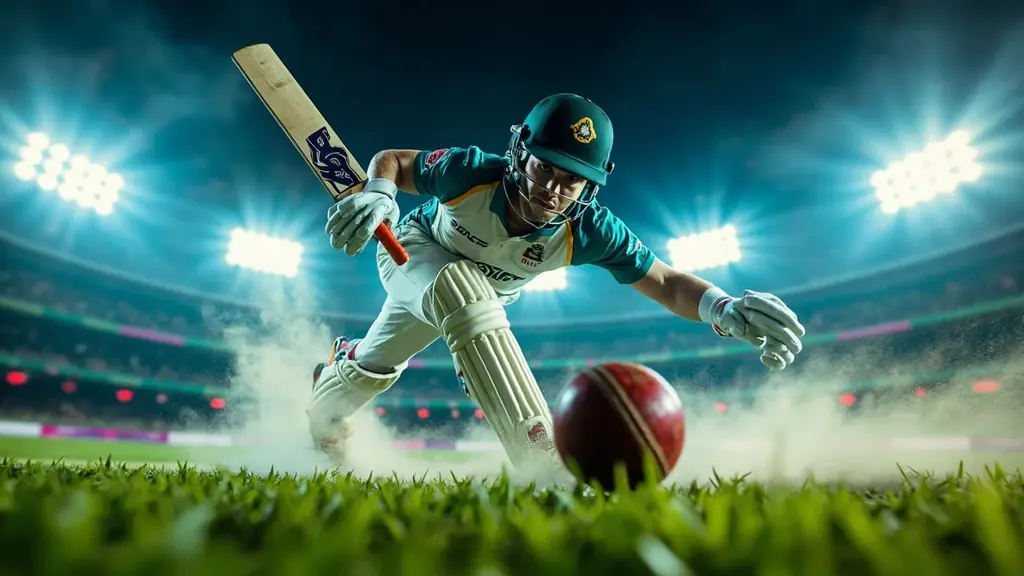
Visual reference frames — generated inline.On fantasy cricket, visual reference frames — generated inline.
Frequently asked questions
How often are tips published?
Weekly. One tip per week, on Tuesdays, with a Friday follow-up if the topic warrants deeper coverage.
How long is each tip?
800-1500 words. Long enough to develop a framework, short enough to read in one sitting.
Do you publish differential-specific tips?
Yes — differential captain picks, role-balance case studies, and contest-tier-specific tactics.
Can I suggest a tip topic?
Yes. Email the customer-care hub with "Tip topic" in the subject. We honour the most-requested topics in the queue.
Are tips updated post-publication?
Yes. Each tip has a "last updated" date. Major updates (e.g., a methodology change in the underlying 4-factor model) trigger a public note.
Continue reading
Responsible play note
Fantasy contests are skill-based products intended as entertainment for adults aged 18+. Always set deposit and time limits before you start. Read our Responsible Play policy.For the fantasy cricket desk, fantasy contests are skill-based products intended as entertainment for adults aged 18+. Within the SportsCricket Fantasy framework, always set deposit and time limits before you start. Fantasy readers should note that read our Responsible Play policy.
Read the fantasy tips library
Captain calibration, contest selection, role balance, tournament strategy, variance management. Weekly cadence.
From the rest of the desk
Selected reading from the past eight weeks
Editorial notes the desk has published on adjacent topics. Each piece links back to the methodology that informs the operator reviews, the captain pick calibration, and the prediction desk output.On fantasy cricket, editorial notes the desk has published on adjacent topics. For the fantasy cricket desk, each piece links back to the methodology that informs the operator reviews, the captain pick calibration, and the prediction desk output.
Calibration in low-data tournaments
Low-data tournaments — bilateral T20Is, regional qualifiers, the early rounds of a multi-stage event — are the toughest calibration environment. Venue sample size is small, batter form windows are short, and the bowler rotation churns quickly. The desk treats low-data tournaments as a separate prediction target. We publish confidence bands that are wider than the IPL cycle, and we tilt the captain-card weight toward role certainty rather than form. The intuition is that role certainty is the most stable signal when sample size is small.On fantasy cricket, low-data tournaments — bilateral T20Is, regional qualifiers, the early rounds of a multi-stage event — are the toughest calibration environment. For the fantasy cricket desk, venue sample size is small, batter form windows are short, and the bowler rotation churns quickly. Within the SportsCricket Fantasy framework, the desk treats low-data tournaments as a separate prediction target. As the fantasy cricket work shows, we publish confidence bands that are wider than the IPL cycle, and we tilt the captain-card weight toward role certainty rather than form. The intuition is that role certainty is the most stable signal when sample size is small This is why the fantasy cricket desk treats it as a baseline.
The variance ride: a season-long view
Variance is part of fantasy. A season-long view helps: across a 74-fixture IPL, a 60% captain hit rate at 2x multiplier produces roughly 150-180 differential points per entry. A 75% hit rate at 2x multiplier produces 200-260. The difference between hitting the median and hitting the upside is typically one or two correctly calibrated differential picks per week. We publish a monthly variance review with the desk’s view on whether the season is running hot or cold relative to the model baseline.On fantasy cricket, variance is part of fantasy. For the fantasy cricket desk, a season-long view helps: across a 74-fixture IPL, a 60% captain hit rate at 2x multiplier produces roughly 150-180 differential points per entry. Within the SportsCricket Fantasy framework, a 75% hit rate at 2x multiplier produces 200-260. Form readers should note that the difference between hitting the median and hitting the upside is typically one or two correctly calibrated differential picks per week. We publish a monthly variance review with the desk’s view on whether the season is running hot or cold relative to the model baseline This is why the fantasy cricket desk treats it as a baseline.
Operator consolidation: a 2026 reading list
Three editor-recommended deep dives on the changing operator landscape. The first covers regulatory consolidation at the state level — how state-level gaming acts are converging on the “predominance of skill” standard. The second covers operator-side M&A activity — which operators have been acquired, which have raised capital, and how the operator-side wallet behaviour has shifted. The third covers the impact on contest depth — whether the operator consolidation has reduced the variety of contest tiers, and whether the prize pool distribution has tightened.On fantasy cricket, three editor-recommended deep dives on the changing operator landscape. For the fantasy cricket desk, the first covers regulatory consolidation at the state level — how state-level gaming acts are converging on the “predominance of skill” standard. Within the SportsCricket Fantasy framework, the second covers operator-side M&A activity — which operators have been acquired, which have raised capital, and how the operator-side wallet behaviour has shifted. Form readers should note that the third covers the impact on contest depth — whether the operator consolidation has reduced the variety of contest tiers, and whether the prize pool distribution has tightened.
How these notes connect back to the methodology
Each archive note has been audited against the editorial methodology on the Review hub. The desk does not republish sister-site content; each note is desk-original. The 4-factor captain model and the venue-and-match-up prediction model are consistent across the archive, so the recommendations on tournament selection, captain calibration, and contest-tier choice are cross-checked against the same backbone.On fantasy cricket, each archive note has been audited against the editorial methodology on the Review hub. For the fantasy cricket desk, the desk does not republish sister-site content; each note is desk-original. Within the SportsCricket Fantasy framework, the 4-factor captain model and the venue-and-match-up prediction model are consistent across the archive, so the recommendations on tournament selection, captain calibration, and contest-tier choice are cross-checked against the same backbone.
The weekly tip cadence
The fantasy tips library publishes one or two pieces per week. The cadence is set by the topic queue and the tournament cycle — busier weeks (multi-fixture weeks, mid-tournament playoffs) tend to produce two pieces; quieter weeks produce one.
The cadence is documented on the blog index. Each weekly tip is linked from the blog with the publication date, the topic, and a 2-line excerpt. The topic queue is built from reader-submitted ideas, editorial priorities, and tournament-cycle timing.
The tip topics rotate across five categories: captain calibration, contest selection, role balance, tournament strategy, and variance management. The rotation ensures that each category sees a fresh tip every 4-6 weeks.
Each tip is between 800 and 1,500 words. The length is tuned to allow a full framework to develop, with at least one worked example per piece. The 4-factor captain model and the venue-and-match-up prediction model are the consistent backbone across the library.
Sponsored tips are not accepted. The fantasy tips library is editorial-only, and the desk sponsorship policy applies to other hubs (e.g., news hub features), not the tips library.
Tip topics the desk is working on
The desk has a topic queue of 12-15 tip ideas at any time. Some of the latest: the venue-aware captain pick in the death overs, the role-balance math in 8-overs-a-side bilateral fixtures, the differential picks in mid-tournament cycles when form windows are short.
The venue-aware captain pick in the death overs is a piece we have not yet published. The intuition is that the death-overs venue effect is significantly different from the powerplay venue effect, and the captain pick should be tier-aware.
The role-balance math in 8-overs-a-side fixtures is a piece we have been working on for two cycles. The match-up data is sparse, but the captain desk has a working draft that we will publish after one more cycle of confirmation.
The differential picks in mid-tournament cycles is a topic we will publish when the desk has collected enough reader-submitted data. The differential framework is calibrated on data; we publish when the data is sufficient.

Readers who follow fantasy tips on SportsCricketFantasy often want to compare it against similar editorial coverage. Our long-form archive sits next to live fixtures so the same desk covers pre-match, mid-match, and post-match analysis without losing context.
Editorial standards require us to keep methodology transparent. Every chart, every ranking, and every projection lives next to its source data so the model output is reproducible. That discipline is the reason our pieces age better than marketing-led write-ups.On fantasy cricket, editorial standards require us to keep methodology transparent. For the fantasy cricket desk, every chart, every ranking, and every projection lives next to its source data so the model output is reproducible. Within the SportsCricket Fantasy framework, that discipline is the reason our pieces age better than marketing-led write-ups.

For first-time visitors, the quickest way to feel our coverage is to read two contrasting sections side by side. The first section anchors the topic with definitions and verifiable sources. The second section shows how the topic moves during a live match window. Together they form the editorial spine of SportsCricketFantasy.On fantasy cricket, for first-time visitors, the quickest way to feel our coverage is to read two contrasting sections side by side. For the fantasy cricket desk, the first section anchors the topic with definitions and verifiable sources. Within the SportsCricket Fantasy framework, the second section shows how the topic moves during a live match window. As the fantasy cricket work shows, together they form the editorial spine of SportsCricketFantasy.