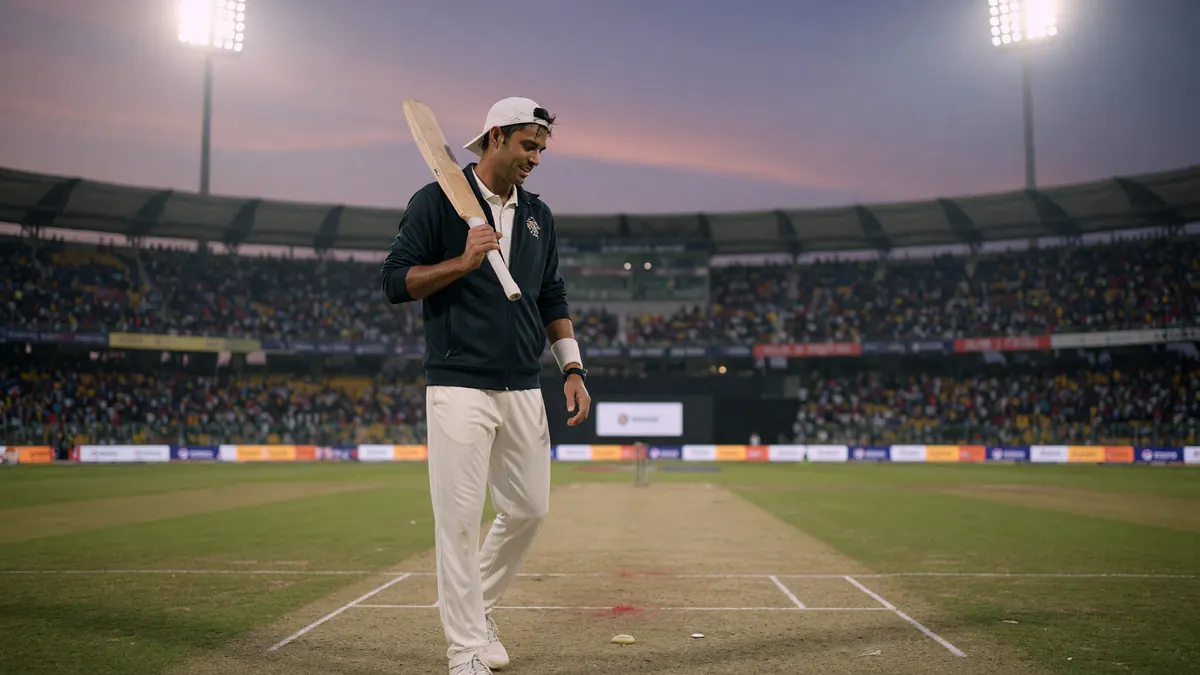
Phil Salt and Chris Jordan walk into Match 2 of The Hundred Men’s 2026 carrying more than ordinary captaincy labels. At the Rose Bowl on Wednesday, 22 July, Salt leads Welsh Fire while keeping wicket; Jordan captains Southern Brave at home. The fixture is scheduled for 11:00 PM IST (5:30 PM GMT, 6:30 PM local), and both franchises are opening their 2026 campaigns in the same night’s work.
Leadership shape matters in 100-ball cricket because roles are compressed. A captain who also keeps, or a captain who still bowls death overs, changes how fantasy managers allocate salary and multiplier risk. The predicted sides published ahead of the game make those dual responsibilities concrete rather than theoretical.
- Home captainChris Jordan · Southern Brave
- Away captainPhil Salt · Welsh Fire (also wk)
- FixtureMatch 2 · Rose Bowl, Southampton
- Start22 July 2026 · 11:00 PM IST
Salt’s three-path night for Fire
Salt’s predicted listing is captain and wicketkeeper in a Fire XI that also includes Jordan Cox, Rachin Ravindra, Joe Root, Tom Kohler-Cadmore, Matthew Short, Marco Jansen, Chris Woakes, Jordan Clark, Lockie Ferguson and Sam Cook. Opening the innings while wearing the gloves gives him access to new-ball scoring and dismissal points without needing a second specialist role to justify his price.
That combination is why Salt sits at the centre of most Fire-leaning builds even before toss confirmation. If he faces only a short stay, glove work can still salvage a floor. If he bats through a power phase, the captaincy multiplier becomes the difference between a usable score and a week-defining one. None of that guarantees output; it only explains why ownership concentrates.
Around him, Fire’s batting names pull in different directions. Root offers classical timing against a bounce package rather than pure muscle. Cox and Kohler-Cadmore are the clearer ball-strikers if the total needs acceleration. Ravindra and Short are the dual-threat pieces managers use when they want Fire exposure without paying full freight for Salt’s multiplier slot.
Jordan’s Brave brief: control plus bowling leverage
Jordan’s predicted Brave group lists Tom Abell, Thomas Rew, David Miller, Jamie Smith (wk), Marcus Stoinis, Tristan Stubbs, Nikhil Chaudhary, Jordan (c), Jofra Archer, Adil Rashid and Dan Worrall. Unlike Salt, Jordan is not the side’s primary batting engine. His fantasy case is built on bowling overs, fielding volume and the soft leadership signal that he will be on the field for every phase.
In practical terms, managers rarely hand Jordan the captain armband unless they are bowling-heavy in a contest that rewards wickets heavily. The more common path is to captain Smith or Miller on the Brave side and keep Jordan as a specialist bowling piece behind Archer. Worrall and Rashid complete a varied attack that can still work on a bounce-first surface if batters are forced into awkward lengths.
Smith is Brave’s cleaner mirror of Salt’s multi-path profile: gloves plus top-order access. Miller remains the finisher most managers trust when a chase tightens. Stoinis and Stubbs fill the middle with boundary options; Chaudhary is the spin-bowling all-rounder who becomes relevant if the middle phase slows.
How last season’s table frames the captains
Brave finished fifth last season. Fire finished bottom and have not reached the Hundred playoffs across five campaigns. Those facts explain tone more than tactics. Jordan inherits a side with batting depth on the predicted sheet; Salt inherits a reset roster stacked with recognisable overseas and English white-ball names. Preview lean toward Brave often cites head-to-head history — Brave lead the series 7–1 from nine meetings, with one washout — and that depth contrast.
Captaincy fantasy is still not a pure form table. A fifth-place side can lose its first night if the new ball dominates. A last-place side can clear a modest total if Salt or Root bat long enough for Ferguson, Cook or Woakes to defend. Treat table position as context for pressure, not as a substitute for teamsheet confirmation.
Captain and vice patterns for this specific pairing
In head-to-head contests, Salt is the default Fire captain whenever he is confirmed to open and keep. Smith is the Brave-side default when managers want home batting plus gloves without paying for Miller’s ceiling. Archer is the bowling captain for users who read the 140–150 scoring band as a wicket night rather than a batting carnival.
Vice-captain choices fan out from there. Jansen and Stoinis cover dual contribution. Root is a legitimate alternate if you expect him to face a long share against pace rather than hole out early. Differential notes sometimes float Chaudhary or Short; those only belong in grand-league builds that need low-ownership leverage, not in median small-field sides.
Avoid locking a captain solely because “home side” or “H2H dominance” sounds decisive. The predicted XIs are still one official sheet away from confirmation. If Fire omit a seamer or Brave rest a spinner, the multiplier map shifts faster than any pre-match narrative about fifth versus last.
What to watch at the toss window
Three captain-relevant checks matter more than recycled storylines. First: does Salt retain the gloves and an opening berth together? Second: do Brave confirm both Archer and Rashid in the same XI, or does the balance tip further toward seam? Third: is Root locked in Fire’s top order, or does the side push pure power higher and move him into a different ball share?
Those answers decide whether your captain pool stays Salt/Smith-led or whether Archer becomes the primary multiplier. Until then, build two drafts — one batting-led around the keepers, one bowling-led around Archer and a Fire seamer — and be ready to delete the wrong one in the final ten minutes.
For the wider Match 2 slate and later Hundred Men’s notes from the desk, follow the running coverage on SportsCricketFantasy news.
Salary construction when both captains are expensive
Salt’s multi-path profile usually prices him near the top of the Fire list. Jordan is cheaper relative to pure batters but still competes with Archer and Miller for Brave-side salary. A workable method is to decide the multiplier first, then build the spine, then spend leftovers on differentials.
If Salt is captain, pair him with one Fire dual-threat piece — Ravindra or Short on the predicted sheet — and avoid loading four Fire batters unless the contest is grand-league only. The remaining budget should buy Archer or Smith so you are not entirely exposed to an away collapse. If Smith is captain, reverse the logic: lock a Brave batting partner such as Miller or Stoinis, then take Salt as a non-captain if salary allows, accepting that two keeper-batters can cannibalise each other in some formats.
Jordan as captain is the bowling-specialist route. It only makes sense when you already believe 140–150 means wickets outscore middling batting returns. In that build, Ferguson or Cook becomes the Fire-side bowling pair partner, and you accept thinner batting depth. Most head-to-head players should treat that as a secondary draft rather than the default.
Ownership tension inside small fields
In small fields, chalk captains win more often than social media implies. Salt and Smith are chalk for structural reasons already listed. Beating the field then depends on the third and fourth selections around them — whether you side with Root’s ball share, Miller’s finishing, or a second seamer when cloud cover thickens. Chasing ultra-low ownership on Chaudhary or Clark before the teamsheet lands is usually a grand-league habit transplanted into the wrong contest type.
Track one simple rule after the toss: if your captain’s role is confirmed and the opposing attack loses a strike bowler, hold. If your captain drops down the order or loses the gloves, switch immediately even if you already spent twenty minutes on the first draft. Role beats narrative once the sheet is real.
Reading Fire’s reset without overselling it
Five seasons without a playoff and a last-place finish explain why Fire’s predicted XI is heavy with pedigree names. That does not automatically translate into first-night fluency. New combinations need time to learn who bowls the tenth block of ten balls and who fields at backward point for the wide yorker. Fantasy managers should price that uncertainty by keeping Fire stacks narrower than Brave stacks until evidence appears on the field.
Conversely, Brave’s fifth-place finish is not a ceiling. Depth on the predicted sheet — Smith, Miller, Stoinis, Stubbs, Archer, Rashid — supports wider home ownership if the middle order faces enough balls. The trap is assuming depth equals a high total. On a bounce package, depth can just as easily mean more batters get starts and get out, spraying points across many names rather than concentrating them in one hero score.
Checklist thirty minutes before lock
Confirm Salt’s opening-plus-gloves pairing. Confirm Jordan’s bowling load expectations if he is in your side at all. Check whether Brave name both Archer and Rashid. Check whether Fire retain Root in the top order beside Salt and Cox. Re-run captain rank only after those four answers. Then publish the entry and stop tinkering unless a late injury note appears.
The season is long enough that one opener should not empty the week’s bankroll. Use Match 2 to test process: role first, venue second, franchise loyalty last. Salt and Jordan define the leadership frame; the rest of the sheet decides whether that frame pays.
Responsible play
Fantasy contests are for adults 18+ and should stay inside a fixed entertainment budget. Set deposit and time limits before lock-in.