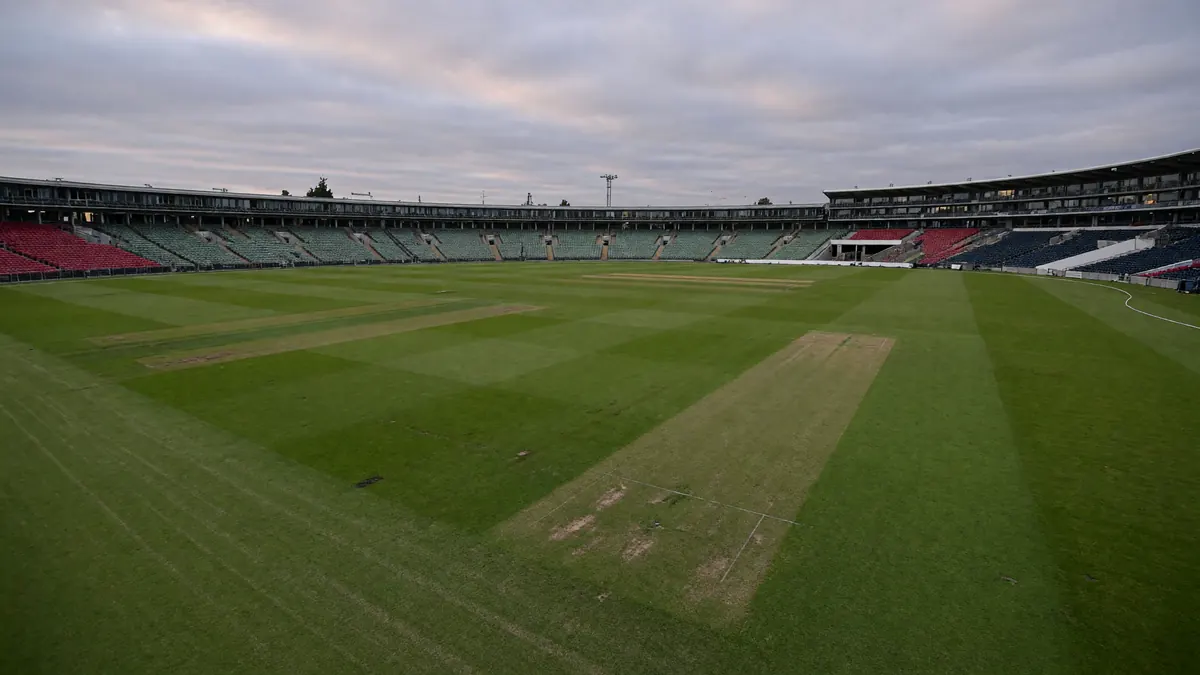
Match 2 of The Hundred Men’s 2026 is not only a season opener between Southern Brave and Welsh Fire. It is also a specific Southampton night: the Rose Bowl, cloudy evening weather near 23°C, humidity around 56 percent, and a bounce-friendly surface with an average score band cited around 140–150. The game starts at 11:00 PM IST on Wednesday, 22 July (5:30 PM GMT, 6:30 PM local).
For fantasy managers, venue packages decide first-pass value more cleanly than franchise narratives. A bouncy pitch under cloud cover is not an automatic “bowl first and stack quicks” slogan, but it does change which roles clear the floor when totals sit in the mid-140s rather than ballooning past 170.
- VenueThe Rose Bowl, Southampton
- Weather readCloudy · ~23°C · humidity ~56%
- Surface noteBouncy wicket · pace interest
- Score bandAverage cited around 140–150
What a 140–150 game actually rewards
Moderate totals still produce captains. They simply shift the distribution of points. Pure accumulators who need thirty balls to settle become riskier. Finishers who can clear a short boundary in the final twenty balls remain valuable. Bowlers who take wickets in five- or ten-ball bursts can outscore a quiet thirty from a top-order batter when multipliers are applied.
That is why the Rose Bowl report should push managers toward role certainty rather than brand names. A player who bowls a meaningful share and bats in the top six is structurally safer than a specialist who needs the match to become a batting exhibition. Death overs stay high leverage even when the ceiling is capped, because a single over of missed length can still swing a contest.
Pace first, spin as the change-up
The predicted bowling groups mirror that venue logic. Brave’s list carries Jofra Archer, Dan Worrall, Chris Jordan and Adil Rashid. Fire’s list carries Marco Jansen, Chris Woakes, Jordan Clark, Lockie Ferguson and Sam Cook. The quicks are the default on a bounce report; Rashid remains the high-skill change-up if batters are already hopping against seam and then face a different trajectory.
Archer is the clearest pure bowling ceiling if the surface plays as advertised. Ferguson and Cook raise Fire’s strike rate with the ball. Woakes supplies control with the new ball. Worrall and Jordan offer hard lengths and slower-ball variation for the home side. Clark is the local seam differential when managers overload overseas bowlers and leave an England domestic seamer uncovered.
None of those names should be stacked blindly five-deep. A mid-140s total still leaves substantial batting points on the table. Two or three seamers plus one spinner or all-rounder bowling share is a more balanced first draft than an all-pace lottery ticket.
Batting against bounce under lights
Predicted Brave batting features Tom Abell and Thomas Rew up top, David Miller as a finisher, Jamie Smith with the gloves, plus Marcus Stoinis and Tristan Stubbs through the middle. Fire’s predicted batting runs Phil Salt (captain and keeper), Jordan Cox, Rachin Ravindra, Joe Root, Tom Kohler-Cadmore and Matthew Short, with Jansen offering lower-order hitting.
Against bounce, managers should prefer batters comfortable leaving or riding hard lengths over pure half-volley hitters who need the ball in the slot. Salt and Smith still lead because they see the new ball and collect glove points. Miller remains the Brave finisher most trusted when a chase tightens. Root’s timing game can work if the ball comes onto the bat; it is less attractive if he is forced into repeated cross-bat shots against climbing seam.
All-rounders — Stoinis, Chaudhary, Ravindra, Short, Jansen — gain relative value when totals are modest, because a quiet batting night can still be repaired with two overs and a couple of fielding moments. That is the structural reason dual-threat players often clear the floor on bounce-first surfaces.
Head-to-head noise versus surface signal
Brave lead the historical ledger 7–1 from nine meetings with Fire, with one game called off. Preview lean toward the home side often pairs that record with Brave’s batting depth. Surface signal should still sit above rivalry lore. A single cloudy night at the Rose Bowl can flatten five years of H2H if the new ball dominates or if Fire’s seamers defend 145.
For fantasy construction, translate history into stack width rather than result certainty. Brave’s depth supports multi-player home stacks if their middle order sees enough balls. Fire’s upside concentrates in Salt plus one or two dual-threat pieces if the chase becomes uneven. Neither path requires you to “pick the winner” before you pick roles.
A venue-first XI checklist before lock-in
Start with the keeper decision: Smith or Salt, unless your contest allows both. Add one bounce-proof top-order batter from each side only if salary remains. Lock two seamers who are expected to bowl at the death or with the new ball. Fill all-rounder slots before pure specialists. Leave one flexible bench spot until the official teamsheets confirm whether Brave retain Archer and Rashid together and whether Fire’s Root–Ravindra–Short balance holds.
If cloud cover thickens and an extra seamer sneaks into either XI, upgrade bowling one notch and trim a pure middle-order hitter. If the toss pitch report softens the bounce story, reverse that move. The venue package is a prior, not a final verdict.
For full Match 2 fantasy notes and later Hundred Men’s coverage from the desk, follow the running feed on SportsCricketFantasy news.
Cloud cover, humidity and the new ball window
Cloudy evening conditions around 23°C with humidity near 56 percent are not dramatic storm numbers, but they are enough to keep the new ball in the conversation for longer than a dry, clear night. In 100-ball cricket that often means the first twenty to thirty balls decide whether chases become scrambles. Fantasy managers should overweight bowlers scheduled for the new ball and batters who can leave well rather than those who thrash at width immediately.
Humidity also feeds the slower-ball conversation later in the innings. Jordan and Woakes-type skill sets — if they bowl at the death — gain a second path to wickets beyond raw bounce. That does not require you to captain them; it does argue for including at least one control seamer beside a pure strike option such as Archer or Ferguson.
Field settings you can price without being on the ground
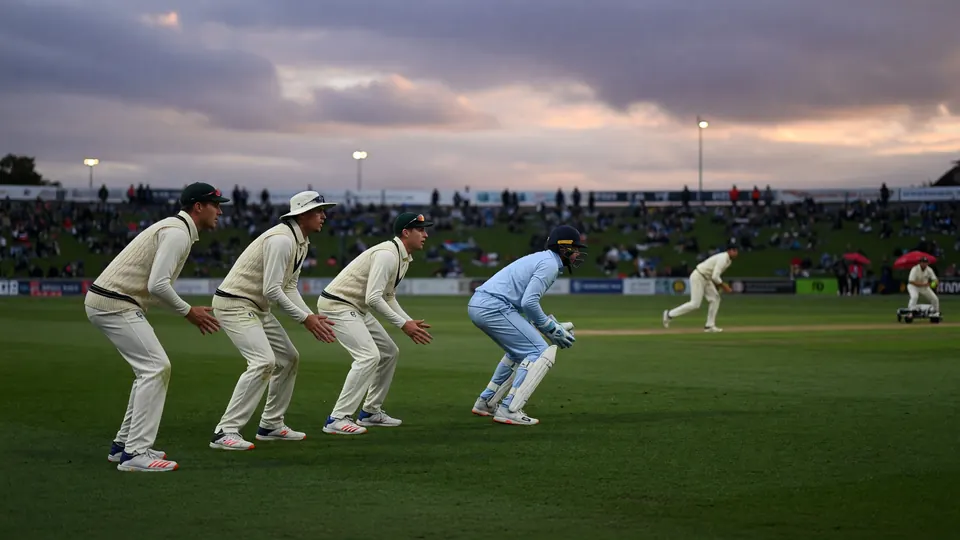
When bounce is expected, catching cords move closer and midwicket can become a productive dismissal zone for the short ball. That mildly raises fielding-point variance for athleticism-heavy sides, but it should not dominate selection. Treat fielding as a tie-breaker between two similarly priced seamers, not as a primary ranking factor. The larger effect is psychological for batters: early edges increase dot-ball pressure, which then feeds bowling fantasy scores even when boundaries still come in clusters later.
How the 140–150 band changes contest choice
Head-to-head contests in moderate-total games reward clean role selection and punish speculative third spinners. Grand-league contests still allow a differential seamer or a lower-order hitting all-rounder because unique wickets create rank. If your bankroll forces one entry type tonight, prefer head-to-head unless you have a specific read that Fire’s seam battery will take early wickets while Salt alone carries the chase — a volatile path that belongs in limited grand-league exposure.
Also match contest size to certainty. If the official XIs are late and you are still guessing whether Rashid plays, reduce stake size rather than “solving” uncertainty with more unique picks. Venue packages help priors; they do not replace confirmation.
Side-by-side bowling maps from the predicted sheets
Brave’s predicted pace-spin mix is Archer, Worrall, Jordan, Rashid, with Stoinis and Chaudhary as part-time or match-up overs. Fire’s mix is Jansen, Woakes, Clark, Ferguson, Cook, with Short or Ravindra possibly adding a few balls. On a bounce-first night, first-pass ranking inside those lists should start with confirmed new-ball and death overs, then fill the middle with the best match-up spinner or left-arm angle.
A sample balanced bowling core without declaring it a lock: Archer plus one of Worrall/Jordan from Brave; Ferguson or Cook plus Woakes or Jansen from Fire; hold Rashid only if you need a third Brave bowling exposure or if the middle-overs match-up looks soft. Swap Clark in when you need a differential and the overseas seamers are heavily owned.
Final venue discipline
Do not let H2H dominance or last season’s table override the pitch note. Brave’s 7–1 historical edge and fifth-place finish are real, as is Fire’s playoff drought — but Wednesday’s scoring band and bounce package are the immediate constraints on point distribution. Build as if 145 is the median total, keep dual-threat players ahead of pure specialists where salary allows, and wait for the teamsheet before spending the last two roster slots.
Once the toss is done, re-check only three toggles: extra seamer yes/no, spinner retained yes/no, Salt/Smith roles unchanged yes/no. Then lock. The Rose Bowl will not reward the manager who rewrites the entire side five times in ten minutes; it rewards the one who priced bounce correctly the first time and only adjusted for confirmed roles.
Responsible play
Fantasy contests are for adults 18+ and should stay inside a fixed entertainment budget. Set deposit and time limits before lock-in.