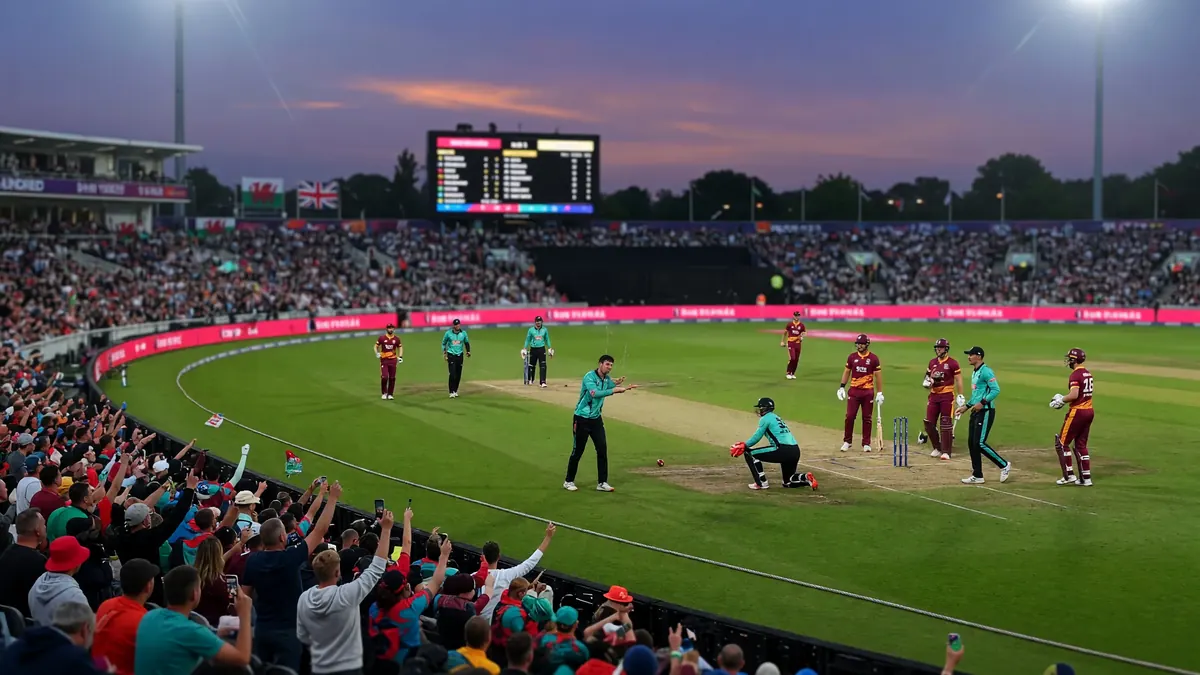
Southern Brave and Welsh Fire open their Hundred Men’s 2026 accounts against each other at the Rose Bowl, Southampton, on Wednesday, 22 July. The contest is listed as Match 2 of the competition and is scheduled for 11:00 PM IST, which is 5:30 PM GMT and 6:30 PM local time. For fantasy managers who build around short-form English summer cricket, it is the first full look at how each side wants to score and defend across a 100-ball innings.
The fixture carries clean season-start stakes rather than mid-table noise. Brave finished fifth last season. Fire finished bottom and, across five Hundred campaigns, have still not reached the playoffs. Chris Jordan captains the home side; Phil Salt leads Fire while also keeping wicket. Those two leadership roles shape how both line-ups are likely to look when the teamsheets settle.
- FixtureSouthern Brave vs Welsh Fire · Match 2 · Hundred Men’s 2026
- When22 July 2026 · 11:00 PM IST / 5:30 PM GMT / 6:30 PM local
- WhereThe Rose Bowl, Southampton
- CaptainsChris Jordan (Brave) · Phil Salt (Fire, keeper)
Why a Hundred opener asks different fantasy questions
A 100-ball innings compresses decision-making. There is less room to “bat around” a slow starter, and bowling spells are often fragmented into five- or ten-ball bursts rather than neat four-over blocks. That matters for ownership: all-rounders who bowl a meaningful share and bat in the top six tend to clear the floor more often than pure specialists who need a long runway.
Season openers also strip away mid-tournament form cues. Managers lean harder on role certainty, auction-reinforced combinations, and venue behaviour. For this match, the published predicted XIs still sit one official teamsheet away from confirmation, so any locked entry should stay flexible until the toss window.
Rose Bowl package: bounce, cloud cover, and a 140–150 baseline
Venue reporting for Wednesday evening in Southampton points to cloudy conditions, temperatures around 23°C, and humidity near 56 percent. The surface itself is described as a bouncy Rose Bowl wicket that keeps fast bowlers interested, with the new ball expected to move and an average score band cited around 140–150. That is not a license to empty the bench of spin, but it does tilt first-pass value toward pace units who can hit hard lengths and toward batters comfortable against bounce rather than pure half-volley hitters.
In fantasy terms, a 140–150 game still produces captains. It simply rewards players who create wickets or finish overs with the bat when the scoring rate dips mid-innings. Death overs remain high leverage even when the ceiling is moderate, because missed yorkers and mis-hit sixes still swing multiplier scores.
Southern Brave: depth first, pace second
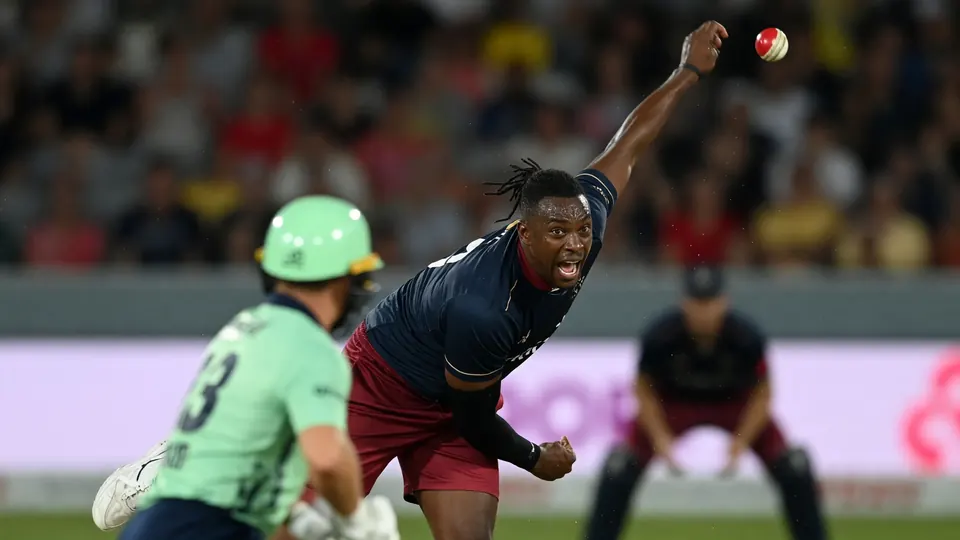
Jordan’s group arrives with a settled-looking core on paper. The predicted Brave XI carries Tom Abell and Thomas Rew at the top of the batting order, David Miller as a middle-order finisher, Jamie Smith as wicketkeeper, Marcus Stoinis and Tristan Stubbs as multi-phase hitters, Nikhil Chaudhary as a spin-bowling all-rounder option, then Jordan, Jofra Archer, Adil Rashid and Dan Worrall to close the bowling group.
Three names drive most Brave-side constructions. Jamie Smith offers keeper points plus top-order access to the new ball. Archer is the clearest pure bowling ceiling if the surface plays true to the bounce report. Miller remains the batter most managers trust when a chase or a middle-overs rebuild needs clean striking rather than accumulation. Stoinis sits in the awkward-but-useful band: he can fail with the bat and still bowl, which stabilises floor scores in small-field contests.
Rashid’s inclusion keeps a world-class wrist-spin option on a ground often labelled as pace-friendly. That is not a contradiction if batters are forced into cross-bat shots against bounce and then face a different trajectory in the middle phase. Worrall and Jordan supply hard lengths and slower-ball variation; neither is automatic captain material, but both are legitimate when managers want a second Brave bowling stack behind Archer.
Welsh Fire: Salt’s reset with pedigree names
Fire’s five-season playoff drought and last-place finish explain the roster churn. Under Salt, the predicted side mixes English white-ball experience with overseas punch: Salt (captain and keeper), Jordan Cox, Rachin Ravindra, Joe Root, Tom Kohler-Cadmore, Matthew Short, Marco Jansen, Chris Woakes, Jordan Clark, Lockie Ferguson and Sam Cook.
Salt is the franchise’s clearest fantasy spine. Opening, keeping and captaining gives him three paths to a usable score even if one discipline is quiet. Root’s presence is the stylistic contrast: classic timing and gap-finding rather than pure power, which can still work if the ball comes onto the bat under lights. Ravindra and Short are the dual-threat pieces most likely to absorb both batting and bowling ownership in balanced teams.
The bowling card is stacked with recognisable names. Jansen brings left-arm bounce and lower-order hitting. Woakes offers control with the new ball. Ferguson and Cook raise the strike-bowler ceiling if the Rose Bowl seams or climbs. Clark is the local seam option who often becomes a differential when managers overload overseas bowlers and leave an England domestic seamer uncovered.
Head-to-head context without overreading it
The sides have met nine times in The Hundred. Brave have won seven, Fire one, and one fixture was called off. That ledger explains why many match previews lean toward the home side, especially with Brave’s batting depth on the predicted sheet. It should not be treated as a locked result engine. Season-open XIs, new combinations and a single venue night can flatten historical edges quickly, particularly in a format where ten balls of chaos rewrite a chase.
For fantasy, the practical read is simpler than a win prediction: Brave’s depth supports multi-player stacks if you believe their middle order will face enough balls, while Fire’s upside is concentrated in Salt plus one or two all-rounders if the chase or set total becomes uneven.
Building an XI: roles before badges
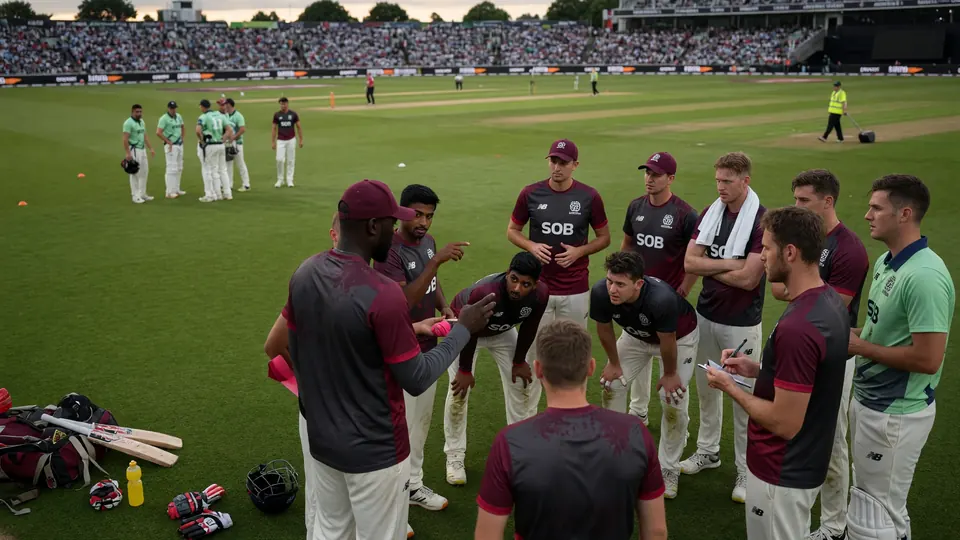
A first draft for this match can start from roles rather than franchise loyalty. Two keepers are viable on the published sheets — Smith for Brave and Salt for Fire — which already forces a choice in formats that allow only one wicketkeeper. If your contest allows two, the pair becomes a high-floor core because both bat high enough to avoid pure lower-order lottery tickets.
In the batting group, Miller and Root pull in opposite directions. Miller is the clearer boundary threat in a compressed innings. Root is the batter more likely to bat through a sticky phase if the new ball dominates. Kohler-Cadmore and Cox are the next tier of Fire hitters; Abell and Rew are the Brave top-order alternatives if you want exposure without paying full freight for Miller.
All-rounder slots are where this fixture gets interesting. Stoinis, Chaudhary, Ravindra, Short and Jansen can all claim dual contributions on paper. Managers building small-field sides should prioritise the two or three with the safest bowling overs. Grand-league builds can stretch toward a third all-rounder if salary caps allow, accepting that one of them may bowl only a handful of balls.
Bowling value concentrates around Archer, Ferguson, Woakes, Cook, Worrall and Rashid. On a bounce report, the quicks are the default, with Rashid retained as the change-up who benefits if batters misread length after facing heavy seam. Avoid filling five pure bowlers unless the contest structure heavily rewards wickets over batting volume; 100-ball totals in the mid-140s still leave substantial batting points on the table.
Captain and vice patterns worth testing
Salt is the most complete single-player package if he opens and keeps. Smith is the Brave-side mirror when managers want home batting plus gloves. Root becomes a legitimate captain only if you expect him to face a long share of the innings rather than hole out early against pace. Archer is the bowling captain for users who think 140–150 means wickets will outscore a quiet thirty from a batter. Jansen and Stoinis sit in the vice-captain conversation because a modest bat score plus two overs can still clear a flat specialist.
Secondary captain ideas circulating in preview notes have also included Chaudhary and Short as differential routes. Those only make sense if you specifically need low-ownership leverage; they are not the median build for head-to-head contests.
Match lean and what still needs confirmation
Preview material from the reporting cycle backs Southern Brave on the combination of head-to-head dominance and batting depth. That is a reasonable on-paper lean, not a verified result. Fire’s bowling names are good enough to defend a modest total if Salt or Root give them a platform. Until the official XIs land, treat every predicted side as a planning sheet rather than a lock.
The next concrete checkpoint is the teamsheet and toss at the Rose Bowl. Watch whether Brave retain both Archer and Rashid together, whether Fire confirm the Root–Ravindra–Short balance, and whether either side sneaks an extra seamer onto the grass if cloud cover thickens. Those three answers will do more for final captain choices than any pre-match narrative about fifth place versus last place.
For ongoing Hundred Men’s notes, fixture updates and later fantasy reads from the desk, follow the running coverage on SportsCricketFantasy news.
Quick reference: predicted sides
Southern Brave (predicted)
Tom Abell, Thomas Rew, David Miller, Jamie Smith (wk), Marcus Stoinis, Tristan Stubbs, Nikhil Chaudhary, Chris Jordan (c), Jofra Archer, Adil Rashid, Dan Worrall.
Welsh Fire (predicted)
Phil Salt (c & wk), Jordan Cox, Rachin Ravindra, Joe Root, Tom Kohler-Cadmore, Matthew Short, Marco Jansen, Chris Woakes, Jordan Clark, Lockie Ferguson, Sam Cook.
Responsible play
Fantasy contests are for adults 18+ and should stay inside a fixed entertainment budget. Set deposit and time limits before lock-in. If play stops feeling routine, step away and use support services listed on our responsible play guidance.