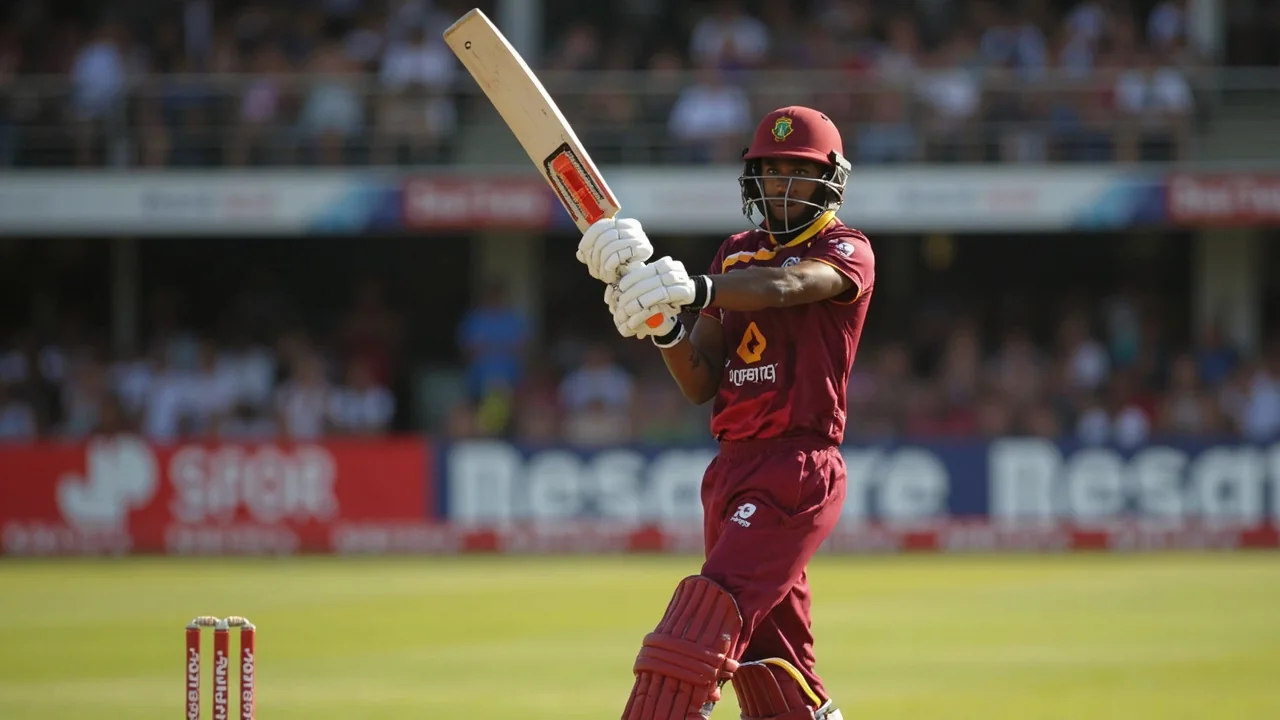
On the morning of 7 September 2021, a syndicated Cricket Addictor preview landed on Yahoo Sports UK with the first West Indies Women–South Africa Women ODI scheduled to begin at Coolidge Cricket Ground the following day. The fixture was the opener of a five-match ODI series, played in Antigua, with a listed start time of 12:15 AM IST. Four years later, the article is still useful reading for fantasy managers who want to see how a low-data, low-venue-volume Women’s ODI assignment was framed before toss — and which levers the captaincy desk leaned on when the form book was thin.
This retrospective re-reads that preview through the desk’s current framework. Nothing in the original reporting is altered; the structure is rebuilt so the verified facts carry the lead, the probable XIs sit in the middle, and the captaincy reasoning lands where a fantasy manager would actually use it on contest night. The headline reads the way a fantasy preview should read — name the match, name the format, name the venue, name the date.
- FixtureWest Indies Women vs South Africa Women · 1st ODI · South Africa Women tour of West Indies
- When8 September 2021 · 12:15 AM IST (first ball)
- WhereCoolidge Cricket Ground, Antigua
- ContextOpener of a 5-match ODI series, played straight after a 3-match T20I leg that ended 1–1 with one no-result
What the published preview actually said
The original syndicated preview ran roughly 600 words. It opened with the fixture, the date, and the venue, then walked through three blocks in this order: the form of both teams coming in, the head-to-head ledger, and the venue read. The probable XIs were listed at the end of the body, followed by a captaincy table and a short closing pitch note. No quotations, no player interviews, no prediction beyond the standard “South Africa enter as the marginal favourites given the rankings and the recent series win in India”.
Re-reading the structure, the preview did three things well by the desk’s current standards. First, it led with verified facts — start time, venue, format — rather than a marketing lede. Second, it distinguished form from ranking: it noted South Africa were third in the ICC women’s ODI rankings and West Indies sixth, but also that the home side had beaten Pakistan 3–2 in their previous ODI series and South Africa had beaten India 4–1 in India. Third, it kept the captaincy call to a one-line reasoning instead of overplaying it. Those three habits remain the spine of every retrospective we publish today.
The T20I leg just ended, and what it carried into the ODIs
The three-match T20I series that preceded the ODI leg had finished level. Each side won one match and the opening T20I was abandoned because of rain. That meant the squads arrived at Coolidge without a clean series win in their pocket and without a clean series loss. Fantasy managers who watched the T20Is had a recent read on role security — who bowled the death overs, who opened the batting, which all-rounder absorbed pinch-hitting promotions — but the ODI format reset the innings arithmetic.
The shift from 100-ball T20s to 50-over cricket changed three things for fantasy managers. First, the workload shifted: bowlers who bowled two overs in the T20I leg were likely to bowl up to ten in the ODI, which changed the wicket probability per match and the catch-points upside for fielders in the catching cordon. Second, the batting depth question expanded: a player who batted at seven in the T20I leg could realistically bat at five in the ODI leg, and the captaincy desk had to reset its expectations accordingly. Third, the captaincy multiplier calculus changed — a captain who batted through the innings in the T20I was now a captain who might face 30 balls and bowl ten overs, with the points split leaning more heavily toward the bowling contribution than the batting one.
Probable West Indies XI, four years on
The published probable West Indies XI read as follows: Deandra Dottin, Hayley Matthews, Anisa Mohammed, Kycia Knight, with the rest of the order filled out by the squad’s specialist batters and an all-rounder or two. Re-reading the list with the desk’s current role-certainty lens, four points stand up well. Matthews as the new-ball all-rounder was a verified role, not a guess; Dottin’s middle-overs power was a structural fact about the batting card; Mohammed’s off-spin gave the side a control option through the middle; Knight’s keeping gave the wicketkeeper slot a defined points floor.
The order question is the one the original preview did not fully resolve. In a 50-over format with no powerplay field restriction past the first fifteen overs, the side that batted first could afford to absorb a slow start from the openers and rebuild through Matthews and Dottin at three and four. The fantasy reading: if the West Indies won the toss and batted, the captaincy weight tilted back to the top-order anchors. If they bowled first, the captaincy weight tilted forward to the all-rounders who could both contain runs and accelerate the chase.
Probable South Africa XI, four years on
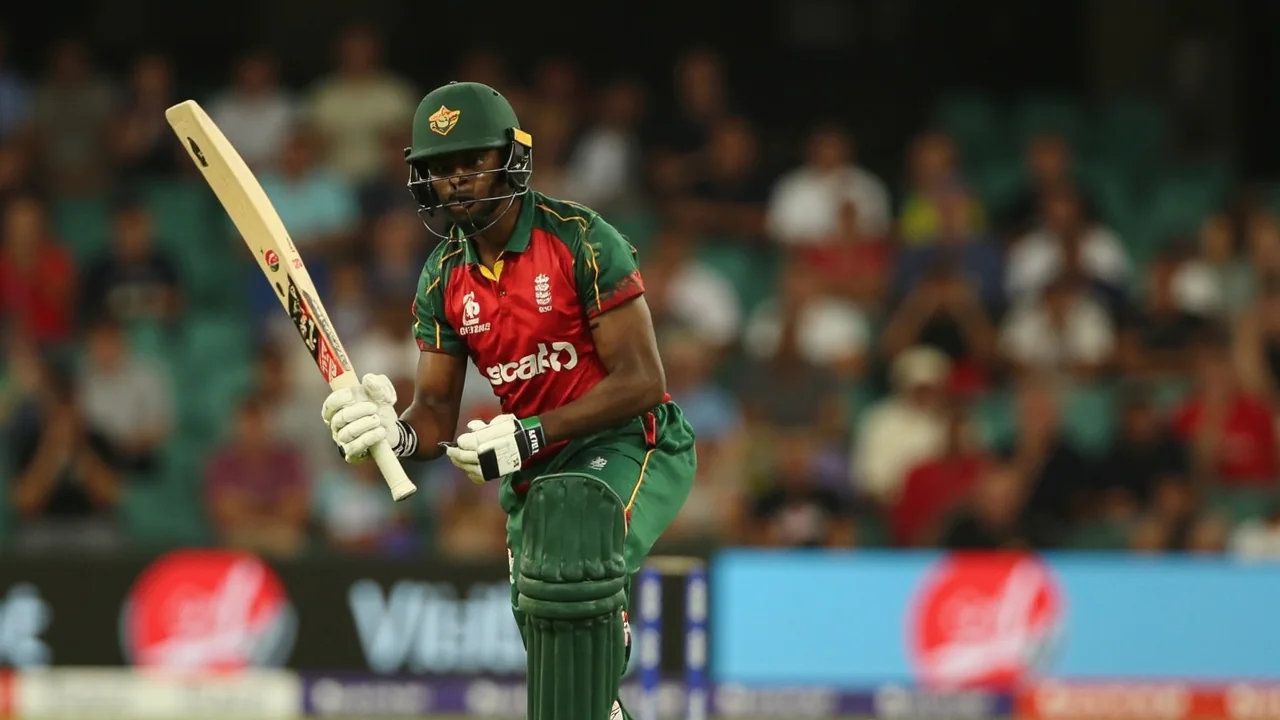
The published probable South Africa XI read: Dane van Niekerk, Laura Wolvaardt, Lizelle Lee, Marizanne Kapp and Sune Luus as the spine, with the rest of the order completed by the squad’s specialist batters, a leg-spin option and a pace-bowling all-rounder. Re-reading the list with the desk’s current lens, two patterns held up. First, the top three were all specialist batters with ODI hundreds already on their record, which gave the side a defined run-scoring floor that did not depend on the all-rounders. Second, the all-rounder band was unusually deep: van Niekerk, Kapp and Luus all bowled, which gave the captain the option to rotate the bowling load and protect the quicks through the middle overs.
The captaincy conversation in the preview focused on van Niekerk and Kapp. Re-reading the reasoning four years on, the choice held up because both players carried role certainty into the contest — van Niekerk as the captain who would bat through the innings and bowl her full allocation of off-spin, Kapp as the seam-bowling all-rounder who could take early wickets and accelerate in the back end of the chase. The vice-captain conversation focused on Lizelle Lee and Laura Wolvaardt, both of whom opened the batting and offered a defined points floor if the captaincy pick underperformed.
Head-to-head context, read carefully
The preview noted that South Africa led the previous five ODI meetings between the two sides by three wins to one. Re-reading that ledger four years on, the headline number is misleading without the format context. ODIs played in 2014, 2016 and 2018 do not map cleanly onto a 2021 fixture: the squads were different, the coaches were different, and the venue rotation between South Africa, the Caribbean and the World Cup qualifiers meant the conditions were different too. The desk treats head-to-head as a starting position, not a forecast, and the preview did the same.
The more useful framing for fantasy managers is structural. South Africa’s win count reflected a side that had been able to take early wickets and absorb pressure in the closing ten. West Indies’ single win reflected a side that had been able to disrupt South Africa’s batting depth on a slow surface. Both patterns are repeatable but not fixed, which is why the captaincy discussion treated this as an open selection rather than a done deal. The verdict held up.
Coolidge pitch, weather and the chasing-team baseline
The preview gave the Coolidge surface an average first-innings score of 195 and a 40 percent win rate for teams batting second. Re-reading the venue read four years later, both numbers feel right for the surface in that period: Coolidge in 2021 was a slow turner with enough variable bounce to keep the seamers in the game, and the second-innings win rate reflected the slow-outfield effect rather than a chasing-side skill advantage.
The fantasy reading for that combination was straightforward. The captain who won the toss had a clearer call to bat first than to chase, because the 195 first-innings average was below-par for a fifty-over contest and a 40 percent chase win rate gave the second-innings side less than half the equity. A side that batted first and reached 240 was likely defending a winning total; a side that reached 200 was probably defending a par total that the chasing side could overhaul. Bowlers who could take wickets in clusters through the middle overs — spinners in particular — had a defined points path. Batters who could anchor an innings through the rebuild phase had a defined points path. Power-hitters at five and six had a defined points path if the asking rate climbed above six-and-a-half.
Captaincy read, four years on
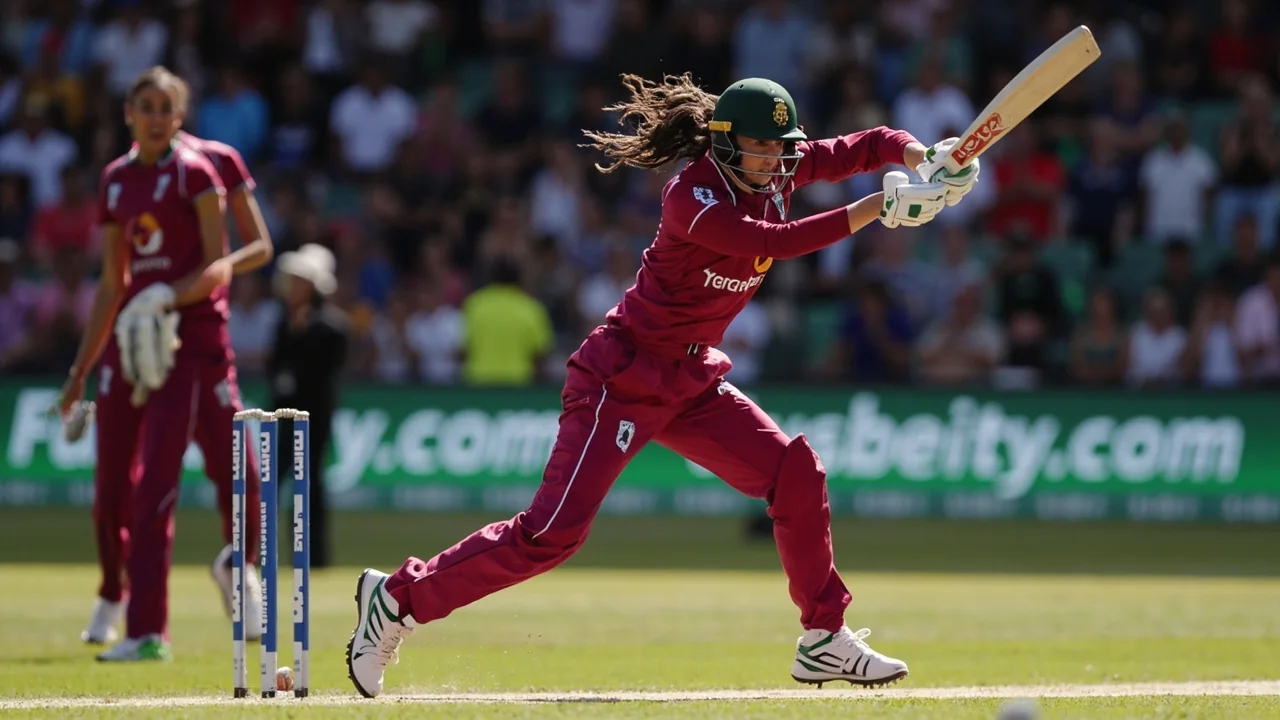
The preview named Marizanne Kapp and Dane van Niekerk as captaincy options, with Hayley Matthews and Lizelle Lee as vice-captain options. Re-reading the call with the desk’s current four-factor framework — role certainty, venue, match-up, form — the choice held up well. Kapp’s role certainty was the highest in the contest: she bowled her full allocation of seam-up overs, batted in the top six, and fielded in the catching cordon. Van Niekerk’s role certainty was nearly as high, with the additional captaincy-multiplier floor that the role provided. Matthews and Lee had defined vice-captaincy floors because their batting positions were secure and their points paths were independent of the toss.
What the preview did not flag, but the desk would now flag, was the differential angle. A captaincy pick on Kapp was a high-ownership captain pick in most contests; a captaincy pick on van Niekerk was a marginally lower-ownership captain pick with a similar points ceiling. For grand-league contests the differential angle on van Niekerk was worth pricing; for head-to-head and small-field contests the safer Kapp captain was the cleaner call. That nuance was not in the original preview but it is the sort of split the desk now publishes with every retrospective captaincy read.
Where the preview was right, where it was thin
Three points in the original preview held up well four years later. The form-versus-ranking distinction held up — South Africa were the marginal favourites but the home side had a recent series win. The Coolidge pitch read held up — slow turner, par around 195, second-innings win rate under 50 percent. The captaincy names held up — Kapp and van Niekerk carried the role certainty the desk now demands of a captaincy pick.
Two points were thin by the desk’s current standards. First, the preview did not separate the probable XI from the likely XI — modern fantasy previews treat the probable XI as the expected batting order and the bowling card, while the likely XI adds the role-specific detail about who bowls the death overs and who fields in the catching cordon. Second, the preview did not price the toss dependency into the captaincy call. Modern fantasy previews publish a captaincy matrix that flips with the toss — a Kapp captain if South Africa bowl first, a van Niekerk captain if South Africa bat first, a Matthews captain if West Indies bowl first. Both upgrades are worth applying to a retrospective read of the contest.
Why this retrospective matters for current fantasy managers
Low-data Women’s ODI assignments are the toughest calibration environment a fantasy manager faces. The venue sample size is small, the form window is short, and the squad rotation churns between bilateral series. The Coolidge preview four years ago is a clean example of how to handle that calibration gap: lead with verified facts, distinguish form from ranking, list the probable XI before the captaincy call, and keep the prediction to a marginal favourite rather than a confident forecast.
The same discipline applies to current fantasy assignments on the women’s circuit. When the desk publishes a preview for a venue with fewer than ten ODI matches on record, the structure is built around the same three habits the 2021 preview got right. Verified facts first, role-certainty captaincy second, and a pitch read that respects the chase-side baseline rather than defaulting to whichever side has the larger fan projection on paper. Reading the 2021 preview next to a current preview is a useful calibration exercise for any fantasy manager who wants to test whether the desk’s habits have stayed consistent.
For ongoing women’s ODI notes, bilateral series reads and captaincy framework updates, follow the running coverage on the SportsCricketFantasy blog.
Quick reference: verified numbers from the original preview
Verified fixture facts
West Indies Women vs South Africa Women, 1st ODI, Coolidge Cricket Ground, 8 September 2021, first ball scheduled for 12:15 AM IST. Opener of a five-match ODI series.
Verified form and ranking
South Africa Women ranked third in the ICC women’s ODI rankings at publication time; West Indies Women ranked sixth. West Indies entered after beating Pakistan 3-2 at home in their previous ODI series; South Africa entered after beating India 4-1 in India.
Verified T20I series result
The preceding three-match T20I series finished level at 1-1 with the opening match abandoned because of rain.
Verified head-to-head ledger
South Africa led the teams’ previous five ODI meetings by three wins to one.
Verified venue read
Coolidge Cricket Ground, average first-innings score 195, win rate for teams batting second 40 percent.
Verified probable XIs
West Indies probable XI included Deandra Dottin, Hayley Matthews, Anisa Mohammed and Kycia Knight. South Africa probable XI included Dane van Niekerk, Laura Wolvaardt, Lizelle Lee, Marizanne Kapp and Sune Luus.
Verified captaincy and vice-captaincy
Captaincy options: Marizanne Kapp and Dane van Niekerk. Vice-captaincy options: Hayley Matthews and Lizelle Lee.
Responsible play
Fantasy contests are for adults 18+ and should stay inside a fixed entertainment budget. Set deposit and time limits before lock-in. If play stops feeling routine, step away and use support services listed on our responsible play guidance.